
I ask, please, that those on my list who are ardent supporters of Trump refrain from writing to me to tell me that Trump always knows what he’s doing, and I shouldn’t second guess him or criticize: that we simply have to wait to see what he is planning and all will be well.
At this point in time, I simply do not believe there is reason to be confident that all will be well. If the president pulls himself out of his present muddle, I will praise him accordingly – and that praise would be substantial. I want – deeply hope – for a resolution that is genuinely positive.
However, what I see is a very complex and deeply worrisome situation that evades easy solutions.
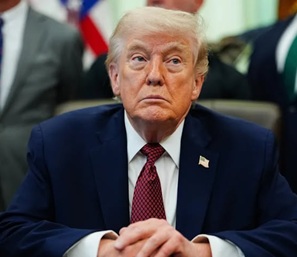
What I write here is an overview. In 24 or 48 hours the situation may have shifted significantly. Again. Keep reading to see how it is shifting even as I write.
~~~~~~~~~~
At the beginning of the joint American-Israeli war with Iran in late February, Trump was hitting hard. Whatever else he aimed for, his declared bottom-line priority was rendering Iran incapable of developing nuclear weaponry; his concern was that Iran was close to achieving that nuclear capability.
Israel, in addition to recognizing the enormous risk of an Iran approaching nuclear capability, was concerned with Iranian ballistic missiles (both those Iran currently possesses and those the Iranians might yet acquire or develop in the future) and Iranian support for proxies – most pertinently right now, Hezbollah, but also Hamas and even the Houthis. It is Israel, and not the US, that is in the immediate range of the missiles and drones of Iran and its proxies.
However, Trump himself and others within his administration made it clear that Israel had not pushed the US into fighting, because Iran was also a threat to the US – which the mullahs refer to as the “Great Satan,” declaring “Death to America.” Not only were American troops in US bases in the Gulf region vulnerable, there was a long history of action by the mullahs against the US, beginning with the hostage crisis of November 4, 1979, when 66 Americans, including diplomats, were taken hostage at the Embassy of the United States in Tehran; 52 were held until January 20, 1981.
The US then fought alongside Israel in an historic first. The two were allies sharing decision-making and demonstrating deep cooperation and mutual respect. It was a heady, and heartening, time.
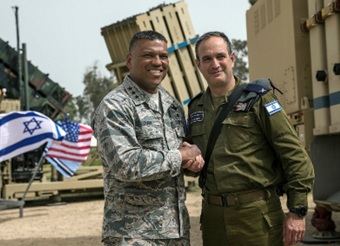
There were reports of near-daily phone consultations between Netanyahu and Trump, and a closeness between the two leaders that was exceptional.
~~~~~~~~~~
But once Iran blocked the Strait of Hormuz, thereby interfering significantly with the international transport of oil and sending gasoline prices soaring, the situation began to sour.

There are critics who believe that the US Central Command (CENTCOM) should have deployed to secure the Strait of Hormuz at the start of the war: That CENTCOM did not anticipate this Iranian action, which would constrain Trump, is seen as a major failure.
For a number of reasons, distress about rising gas prices certainly among them, American domestic discontent with Trump’s continued war against Iran grew. I have broadly considered many of these in previous posts. There is an isolationist thread in American thinking that perceives US action far from home as unwise or unnecessary. Chief among Trump’s concerns has been the mid-term elections, which might result in the Democrats taking Congress if that discontent is not addressed. What is more, there were legal considerations because Trump had acted without sanction from Congress and a legal deadline was looming.
~~~~~~~~~~
The president then shifted his tactics, declaring the war in Iran over and calling for a two-week ceasefire. Israel, having little choice in the matter, participated in that ceasefire. (More about Israel’s situation follows below.) When preliminary US attempts at negotiations with Iran failed, Trump sought to bring down the Iranian regime by blockading Iranian ports. This interference with Iranian trade continues to be enormously costly to Iran, but the regime has held tight and the Strait is still blocked today.
There have been numerous reports about the refusal of Saudi Arabia to allow the US to utilize its coastline or airspace in action against Iran. Here we see the powerful Saudi Crown Prince Mohammed bin Salman.
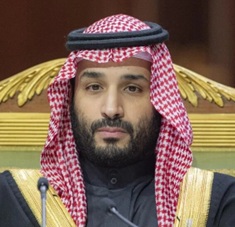
The Saudi position is believed to have been a factor in Trump’s decision-making, when he declared the war over: his action of choice was stymied.
In late April, just hours before the ceasefire Trump had originally declared was scheduled to expire, he announced an extension of the ceasefire that would last indefinitely. Now the president more vigorously sought negotiations with Iran.
~~~~~~~~~~
It was, I think, perhaps inevitable that the greatly touted American-Israeli alliance would weaken or fall apart. The national interests of the US and Israel do not dovetail in all regards, and it is where those interests diverge – perhaps I should say where the perspectives of the leaders of the two nations diverge – that we see this happening.
Prime Minister Netanyahu, understanding the mentality of the Iranian regime and what is at stake, was reluctant in the extreme to cut Iran or its proxies slack. He wanted, and unquestionably still wants, to see the Iranian regime taken down. They are exceedingly deceptive and greatly determined. Their Jihadist goal is the destruction of Israel.
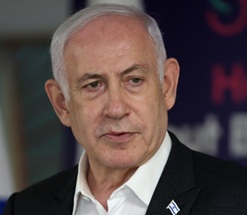
The catch here is the limit in our munitions and military equipment, regardless of the extraordinary determination and consummate skill of our fighting forces. Sometimes, then, is it necessary to cooperate with American policy, in order to sustain the relationship. Sometimes.
~~~~~~~~~~
Trump – a transactionalist – is far more ambivalent in this regard. He wants a win: If it can be gained via clever and tough negotiations that achieve (or appear to achieve) genuine Iranian concessions, he is not adverse to this approach.
Thus do we get the mixed messages. Thus have the people of Israel been asking each other, will he hit Iran again? Thus one day did Trump announce that it is Iran that really wants a deal and that the negotiations are going splendidly, are, in fact almost at a point of being finalized, while a day later, he announced that what Iran is offering is not satisfactory and he may have to resort to “other means” of resolving the conflict.
~~~~~~~~~~
When Trump declared the ceasefire with Iran, Netanyahu went along, however reluctantly. But there was a catch: Hezbollah, which had been attacking in Israel’s north – hurting our citizens and challenging our sovereignty in the region.
It was Iran’s position that Hezbollah had to be enfolded into any ceasefire. Netanyahu was not about to agree to this.
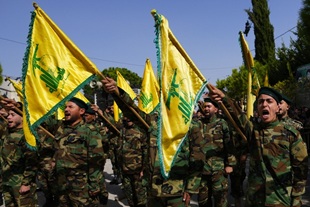
In mid-April, Trump announced a short-term ceasefire between the government of Lebanon (which was not exceedingly receptive and has scant control of Hezbollah in any event), and Israel. It was not between Hezbollah and Israel, and the initiative came from the US. Subsequently, the US announced extensions of this “ceasefire.”
Israel agreed, with the proviso that there would be an Israeli response to any Hezbollah violation. The behavior of Hezbollah has grown increasingly militant – they are killing our soldiers in the south of Lebanon, frequently utilizing drones. Simply responding to this aggression after the fact, without taking action to prevent it, is not an acceptable situation for Israel.
On Sunday, Israel Defense Forces Chief of Staff Lt. Gen. Eyal Zamir said he had approved “plans for the continuation of the combat in [Lebanon].” The IDF is “determined to deepen the blow against Hezbollah across all of its terror systems.”
https://www.jns.org/news/israel-news/idf-chief-approves-plans-for-continued-fighting-in-lebanon
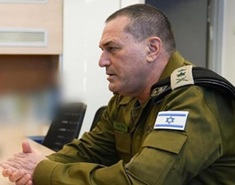
This is precisely the proper decision for Israel, as our responsibility is to protect Israeli life. But it is likely to produce tension – unavoidable tension – with the US, as Trump seeks to find common ground with Iran in order to be able to advance an agreement.
~~~~~~~~~~
This past Saturday, Trump held a conference call with several Gulf and Middle East states – Saudi Arabia, Qatar, the United Arab Emirates, Egypt, Turkey, and Pakistan – to discuss how Iran should be dealt with.
Israel was not included. And so, we see that the heady and heartening time of close consultations between Israel and the US has come to an end, as inevitably it had to.
I have no doubt about the fact that Trump simply did not want to hear what Netanyahu would tell him. Our prime minister called a meeting of security personnel to consider how to deal with this new situation and what would come next.
~~~~~~~~~~
The consensus of the Gulf states was that Iran should not be attacked, but that negotiated agreement should be sought.
I encountered one analyst with an interesting take: The Gulf states would prefer a weakened Iran continuing to function under the current regime rather than an Iran with a new pro-West, democratic orientation. Perhaps. For this new orientation would not be that of the states that were consulted.
But there is a simpler explanation. If the regime in Iran does stand, the Gulf states would prefer that they not be seen as forces that stood against it. As it was, during the war, Iran launched numerous missiles and drones towards these states in warning. I have read that more projectiles were aimed at UAE than at Israel.
~~~~~~~~~~
It made news recently that Netanyahu had paid a secret visit to the leaders of the UAE during the war. When Netanyahu went public with this, the UAE was angry: even though the UAE is a member of the Abraham Accords (one of the very first members), there was a preference for secrecy with regard to high level interactions. That meeting actually resulted in Israel supplying the UAE with Iron Dome installations and the personnel to operate them.
~~~~~~~~~~
Speaking of the Abraham Accords, Trump, along with consultations with the Gulf states, has been pushing them to join the Accords. Understand: he’s talking to Pakistan, and Turkey and Qatar about this. And I ask precisely what is he thinking. These are anti-Israel, Islamist states. What Trump sees is the enormous diplomatic victory this would be for him; but he fails to comprehend the impossibility of what he seeks.
Apparently, he is tasking his ever-loyal envoys, Steve Witkoff and Jared Kushner, to work on this. It seems the two have been involved of late and are among those pushing for a negotiated settlement. Heaven help us.
~~~~~~~~~~
And the latest, which has broken even as I am writing:
“The White House has confirmed a report by Axios, according to which US and Iranian negotiators have reached a tentative agreement on a 60-day memorandum of understanding that would extend the ceasefire and begin negotiations over Iran’s nuclear program.”
https://www.israelnationalnews.com/news/427762
This is pending Trump’s final approval. He says he wants a few days to think about it.
I am not going to comment on this at length now but will track the process and return with more extensive comments. My thoughts at this very tentative juncture: If this is just about the nuclear program, and not about Iranian support for proxies and Iranian ballistic missiles, it is inadequate from the get-go and fails to address Israel’s very real needs.
Part of what Trump is seeking here is the opening of the Strait of Hormuz, which the president would consider a “victory.” How Iran played him on this.
The Axios report says, “the memorandum would include an Iranian commitment not to pursue nuclear weapons.” An Iranian commitment? I would laugh long and hard, except this is too serious for laughing. If the US accepts “an Iranian commitment” at face value we are in a great deal of trouble.
And lastly, “the United States would also agree to discuss sanctions relief and the release of frozen Iranian funds as part of the negotiations.” But it is too soon for this. The fulfillment of all required commitments by Iran should precede release of any funds to Iran.
Unless Trump is so hungry to be done with Iran, and so eager to appear the “winner,” that he will close his eyes to matters where he should not, he will in the end find that he must reject negotiations with Iran as failed and return to attack. This remains to be seen…
~~~~~~~~~~
I ask, as I always do, that you please pray.
©Arlene Kushner. This material is produced by independent journalist Arlene Kushner. Permission is granted for it to be reproduced only with proper attribution.
