
It was roughly 6 AM this morning, and I was sitting in my safe space because of a Home Front alert warning of an incoming Iranian missile that might be headed to Jerusalem, when my daughter, who was sitting in her mamad (safe room) in Beit Shemesh, sent me a WhatsApp message:
“Déjà vu. Didn’t we do this already?”
Yeah, we did this already.
But I was very glad, as well as terribly weary, to be doing it again. At present, it is quiet. This morning (Monday), there were three barrages of missiles, totaling 10 – reports indicated they were all aimed at Israel’s north. All were either intercepted or landed in open space. There were no injuries from the missiles or shrapnel. Whatever may or may not happen down the road – and I will get to this, there are no missiles being launched at Israel as I write.
~~~~~~~~~~
It would be more than a bit of an understatement to say that this is not an easy time for Israel. The situation shifts every couple of hours. But there is a great deal more that has yet to come, much of it hidden under the surface of that shifting daily news.
Let’s go back a few days to consider how we came to where we were when my daughter sent me that WhatsApp.
~~~~~~~~~~
There was a great deal of hoopla regarding Trump’s recent phone call to Netanyahu, during which he demanded that Israel not hit Beirut in retaliation for Hezbollah attacks on the north of Israel. Some claimed that the accusation regarding Trump’s use of profanity in speaking to our prime minister was simply an anti-Trump exaggeration. But no, because Trump himself admitted to this, while Netanyahu worked to play it down with a “good allies sometimes argue” approach.
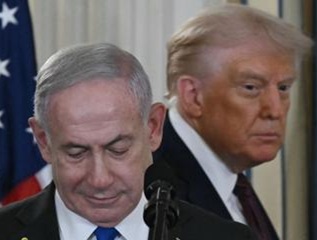
But there was an issue here that goes well beyond the question of how Trump spoke in a moment of anger. To wit: Is our prime minister – who is the head of our sovereign state and called upon to act for the sake of our nation’s security – exhibiting sufficient freedom of action. Does he have the latitude for that action within the context of the Israel-US relationship? Does he insist on the latitude?
As I continue to note, what is in the best interests of the US is not necessarily also what is in the best interests of Israel. And so, sometimes – but not always – compromise for the sake of an exceedingly valuable alliance is appropriate.
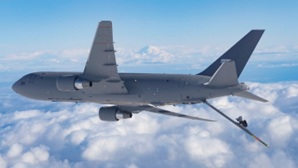
I cite, by way of example, the fact that less than two weeks ago, after waiting years, Israel received delivery of the first of six Boeing KC-46 “Gideon” refueling plane from the United States. These planes will significantly boost Israel’s long-range strike capability. And they will increase the viability of Israeli attacks on Iran if the US steps back.
~~~~~~~~~~
The last time I wrote, I pointed out that even after that much-publicized phone call, declarations by Prime Minister Netanyahu and Defense Minister Katz certainly seemed to indicate that there had been no policy change: We will hit Beirut if Hezbollah continues to attack, they declared. I noted this.
But of course, declarations made with regard to intended actions are not always consistent with the actions that actually follow. This is especially true in a political/diplomatic context. In the end, we did not hit Beirut following that declaration, even after Hezbollah attacked again in Israel’s north. It was not clear if Trump was constraining us, or the Hezbollah actions had not been sufficient to make a clear case for an attack.
~~~~~~~~~
Negotiations between Israel and the Lebanese government had been announced by Trump, who was seeking to forestall an Israeli attack on Beirut.
A series of meetings between the government of Lebanon and the government of Israel were held in Washington DC, under the sponsorship of the US. The last of those meetings was held on June 2 and 3.
Yehiel Leiter, Israeli ambassador to the US, led the talks on behalf of Israel. Simon Karam, a former Lebanese ambassador to Washington and now a special presidential envoy, headed up the Lebanese side. US State Department Chief of Staff Daniel Holler was chief mediator and facilitator; he was accompanied by Deputy National Security Adviser Mike Needham and US Ambassador to Israel Mike Huckabee.
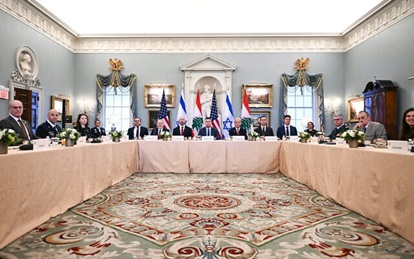
The meeting on June 3 was a marathon session, after which an agreement was officially announced: The two sides would “swiftly advance the creation” of what are being referred to as “pilot zones” in which “the Lebanese Armed Forces will take exclusive control of the territory to the exclusion of all non-state actors.”
The goal was to gradually drive Hezbollah from southern Lebanon but understand that the IDF would also be required to withdraw from the “pilot zones” and would have no role in pushing the terrorists north.
“I think we achieved something today which is relatively unprecedented,” said Leiter. “We brought the people of Lebanon to the understanding that we’re not the enemy. Hezbollah is, and now we’re going to work together to rid the country of this Iranian proxy on Israel’s border, which deprives Israel of its security and the Lebanese people of their freedom.” (Emphasis added)
A ceasefire was agreed upon by Israel and Lebanon, but it was contingent on a “complete cessation of Hezbollah fire…” That was a huge contingency. As long as Hezbollah continued to fire, Israel reserved the right to respond. My immediate thought was to wonder who would imagine that Hezbollah would agree to a complete cessation of fire.
~~~~~~~~~~
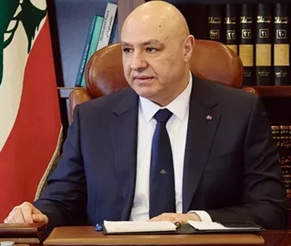
Leiter was correct in that there was a change in the attitude of the government of Lebanon. On Friday, Lebanese President Joseph Aoun – who even very recently refused to speak with the Israelis – accused Iran of using Lebanon as a “bargaining chip” in negotiations with the United States. This was certainly true, as Iran has been linking “a ceasefire” in Lebanon to any ceasefire between the US and Iran. That was a significant step forward.
https://www.israelhayom.com/2026/06/05/joseph-aoun-iran-bargaining-chip-lebanon-cnn-interview/
The question, however, is whether the Lebanese army has the capacity and the will to drive Hezbollah out of the pilot areas and to take control.
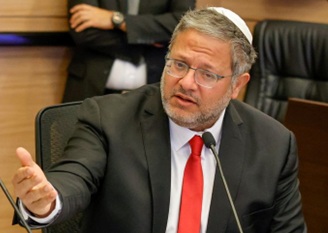
There are many who doubt this, myself amongst them. I cite here MK Itamar Ben-Gvir, who maintained that “Hezbollah will not leave the south of the Litani, and the Lebanese army has no means to force it to evacuate.” Ben-Gvir maintains that this terror group wields significant influence within Lebanon’s political and security institutions: “Lebanon is a partner of Hezbollah. Ministers in the Lebanese government represent Hezbollah, and relatives of its members serve in the Lebanese army.”
He expressed concern, as well, about the fact that a halt in fighting could ultimately strengthen Hezbollah by allowing the group time to recover and rearm.
“The prime minister should have told President Trump: We appreciate you, but Israel is a sovereign and independent state that cannot accept the strengthening, or even the existence, of a terrorist organization on its border.”
~~~~~~~~~~
It took no time before Sheik Naim Qassem, Hezbollah’s secretary general, said that Hezbollah rejected the ceasefire plan agreed upon by the Lebanese and Israeli governments.
And so we see here the internal contradictions in the plans that had been agreed upon. The response to what Qassem said was that it was up to the Lebanese army to handle the situation. But the agreement was predicated on Hezbollah quiet, which, in truth, there was absolutely no reason to expect.
~~~~~~~~~~
What we are seeing is a continuing perversity with regard to the international approach to taking down a terrorist entity – whether Hezbollah or Hamas. In each instance, the IDF is the only one with the will and the capacity to take on the relevant terror entity, and in each instance Israeli participation is ruled out.
~~~~~~~~~~
Hezbollah at this point saw an opportunity to continue to hit in northern Israel and did so again on Sunday morning. But this time, Trump warnings aside, Israel hit Beirut, as we had warned we would. We attacked in the Hezbollah stronghold in the suburb of Dahiyeh and targeted Hezbollah headquarters.
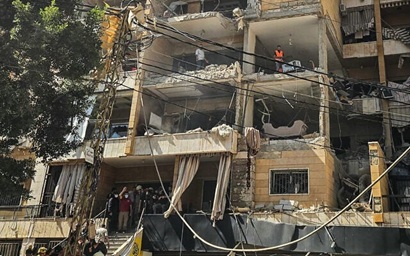
It was an appropriate action on Israel’s part. We must not sit still when areas within our sovereign state are being fired upon, with risk to Israeli citizens. Action was essential. What is more, we had threatened we would attack and thus it was doubly important that we did so.
And here we had an answer to the question posed at the beginning of this post. Netanyahu has demonstrated his readiness to act for Israeli security, even if it displeases a key ally. It will not happen every time, as many factors will be brought to play. But it was reassuring to see this action on Sunday, even as Trump discouraged it. The prospect that the president of the US might be able to decide whether we will be permitted to fight on our own behalf is exceedingly unsettling.
~~~~~~~~~~
Following this, Iran responded to the Israeli attack on Beirut. And thus was I sitting in my safe space, along with millions of others, this morning. I began this posting, above, by describing the situation.
But we were not done yet. The issue of whether to respond to the Iranian attack on Israel had to be decided. Trump was working overtime to convince us to hold fire. The US was very close to striking a deal with Iran, he claimed. I do not believe it for a second. He said that he didn’t want hostilities to get in the way of finalizing that deal.
But we did not hold fire and once again I celebrate the fact that we did not. We hit military installations in western and central Iran, taking out Iranian warning systems, should we need to return again.
Wrote analyst Alex Winston today:
“Had Israel allowed the attack without response, the message to Tehran would have been pretty clear. Hezbollah could continue ignoring any ceasefire, attacking Israel and its soldiers at will, and any Israeli response to Hezbollah could be framed by Tehran as a provocation, allowing Iran to fire directly at Israel while assuming that American diplomatic pressure would keep Jerusalem’s hands tied.
“That is an impossible deterrence model.”
https://www.jpost.com/middle-east/iran-news/article-898671
~~~~~~~~~~
Tonight Prime Minister Netanyahu told the nation:
“In the last 24 hours, Iran and Hezbollah have tried to impose a new equation on us, one that is intolerable and unacceptable in my opinion. That they will fire from Lebanese territory at Israel – and we will not act. That will not happen, not on my watch.
“At the moment, the fire on the Iranian front has been contained, because after we struck the terrorist regime in Tehran, it stopped attacking us. If it returns to attacking us – we will respond with force.
“Iran and Hezbollah are weaker than ever and we are stronger – but the struggle is not over.”
https://www.israelnationalnews.com/news/423124
~~~~~~~~~~
Both Israel and Iran have at this point declared an end to attacks – with certain provisos. There may be other flare-ups similar to what I have just described. But there will not be a major or prolonged war.
This is in part because Trump is working overtime to constrain hostilities. His particular domestic situation likely demands this. What I want to suggest before closing is that there is a possibility that Trump’s message to Israel is not quite the same as what he pretends it to be. There are reports that Israel informed the US before hitting Iran. Trump did not necessarily give the nod, as some claim, but neither did he step forward to stop the attack.
See Marc Zell, international lawyer and Chairman of Republicans Overseas Israel, on this:
“The reports that Trump told Netanyahu not to retaliate are a deliberate deception – part of Trump’s classic strategy to keep the other side off balance.”
https://www.israelnationalnews.com/news/428275

~~~~~~~~~~~
I ask, as I always do, that you please pray.
©Arlene Kushner. This material is produced by independent journalist Arlene Kushner. Permission is granted for it to be reproduced only with proper attribution.
